Comparing Tungsten and Graphite Crucibles: Material Properties and Performance
Physical Characteristics of Tungsten Crucibles
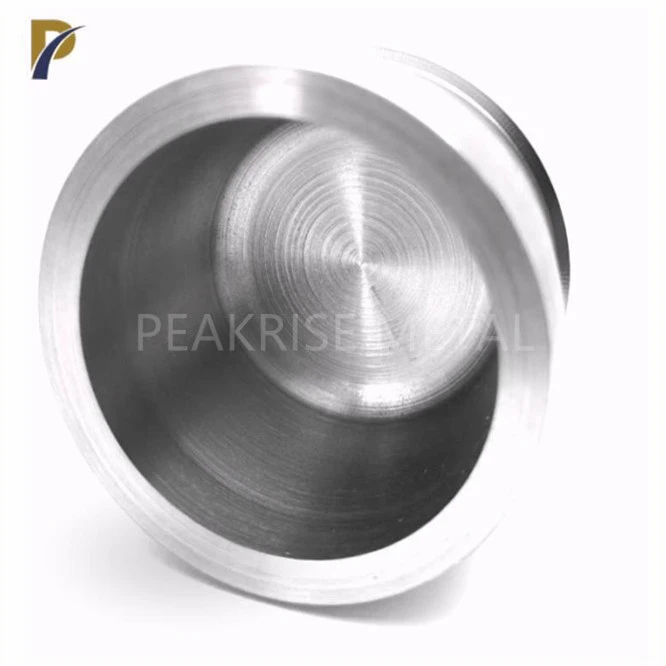
Tungsten crucibles boast exceptional physical properties that make them ideal for extreme conditions. With a density ranging from 17.8 to 19.3 g/cm³, these crucibles offer remarkable stability and heat retention. Their high melting point of 3422°C allows them to maintain structural integrity even in the most intense thermal environments. The low thermal expansion coefficient of tungsten (4.5 µm/m·K at 20°C–100°C) ensures minimal dimensional changes during heating cycles, preserving the crucible's shape and integrity.
Graphite Crucible Attributes
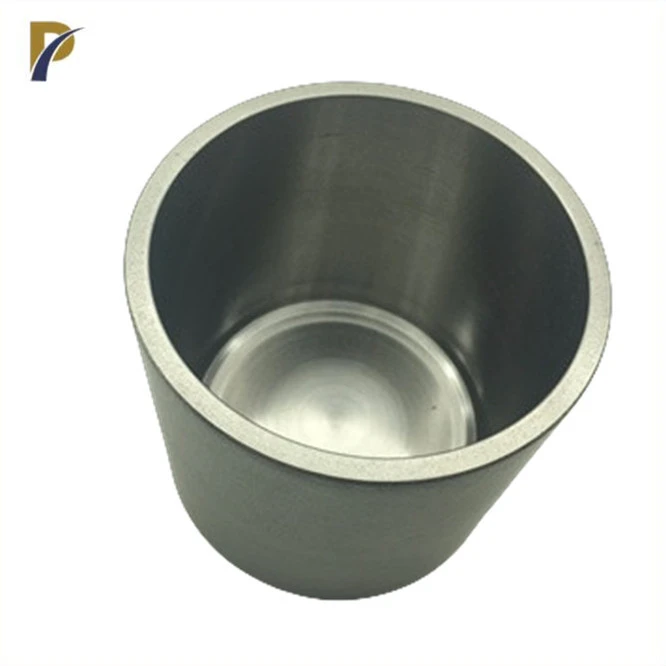
Graphite crucibles, while less dense than tungsten, offer their own set of advantages. Their lower density (typically around 1.5-1.8 g/cm³) makes them lighter and easier to handle. Graphite's excellent thermal conductivity allows for rapid and uniform heating. However, graphite sublimates at 3650°C rather than melting, which can lead to material loss in extreme conditions. Its porosity can also be a double-edged sword, providing good thermal shock resistance but potentially allowing contaminants to penetrate the crucible wall.
Comparative Analysis of Performance
In direct comparison, tungsten crucibles outperform graphite in several key areas. Their superior density and chemical inertness make them ideal for ultra-high purity applications, such as semiconductor manufacturing. Tungsten's resistance to chemical attack surpasses that of graphite, especially in oxidizing environments. While graphite excels in applications requiring rapid temperature changes, tungsten's durability and longevity often make it more cost-effective in the long run for extreme high-temperature processes.
 |
 |
Applications and Industry-Specific Uses of Tungsten and Graphite Crucibles
Tungsten Crucibles in High-Tech Industries
Tungsten crucibles find extensive use in cutting-edge technological applications. In the semiconductor industry, they play a crucial role in the production of high-purity silicon and the growth of sapphire crystals for LED manufacturing. The aerospace sector relies on tungsten crucibles for the melting and casting of superalloys used in jet engine components. Their exceptional purity and stability make them indispensable in research laboratories for experiments involving rare earth elements and other highly reactive materials.
Graphite Crucibles in Traditional and Modern Applications
Graphite crucibles have a long history in metallurgy and continue to be widely used in foundries for casting iron, steel, and non-ferrous alloys. Their excellent thermal shock resistance makes them suitable for processes involving rapid heating and cooling cycles. In the solar industry, graphite crucibles are employed in the production of polycrystalline silicon. They also find application in the manufacture of advanced ceramics and in certain chemical vapor deposition (CVD) processes where their porosity can be advantageous.
Niche Applications and Emerging Technologies
Both tungsten and graphite crucibles are finding new applications in emerging technologies. Tungsten crucibles are being explored for use in advanced nuclear reactor designs and in the development of fusion energy systems. Graphite crucibles, on the other hand, are being investigated for potential use in molten salt reactors and in the production of advanced carbon-based materials. The choice between tungsten and graphite in these cutting-edge fields often depends on the specific requirements of purity, temperature resistance, and chemical compatibility.
Factors Influencing the Choice Between Tungsten and Graphite Crucibles
Temperature Requirements and Thermal Properties
The choice between tungsten and graphite crucibles often hinges on the specific temperature requirements of the application. Tungsten's higher melting point makes it the go-to option for processes exceeding 3000°C, where graphite would begin to sublimate. However, for applications below this temperature, graphite's superior thermal conductivity can offer more uniform heating. The thermal expansion characteristics of each material also play a role, with tungsten's lower expansion rate providing better dimensional stability in cyclical heating processes.
Chemical Compatibility and Purity Considerations
Chemical compatibility is a critical factor in crucible selection. Tungsten crucible's exceptional resistance to chemical attack, particularly from molten metals and corrosive substances, makes it ideal for applications requiring high purity and minimal contamination. Graphite, while inert to many substances, can react with oxygen at high temperatures and may introduce carbon into the melt. In ultra-pure applications, such as semiconductor manufacturing, the superior chemical stability of tungsten often makes it the preferred choice despite its higher cost.
Economic Factors and Long-Term Cost Analysis
The initial cost of tungsten crucibles is significantly higher than that of graphite crucibles. However, a comprehensive cost analysis must consider factors beyond the purchase price. Tungsten crucibles' longer lifespan and ability to withstand more extreme conditions can result in lower long-term costs, especially in high-volume or continuous production environments. Graphite crucibles, while more affordable upfront, may require more frequent replacement and can introduce higher operational costs in certain high-purity applications due to potential contamination issues.
Conclusion
In the debate of tungsten crucibles versus graphite crucibles, the choice ultimately depends on the specific requirements of the application. Tungsten crucibles excel in extreme high-temperature environments, offer superior chemical resistance, and are ideal for applications demanding the utmost purity. Their durability and performance in harsh conditions often justify their higher initial cost. Graphite crucibles, while more limited in temperature range and chemical compatibility, offer advantages in thermal conductivity and are more cost-effective for less demanding applications. As technology advances, both materials continue to find new and innovative uses, underlining the importance of careful consideration in crucible selection for optimal performance and efficiency.
FAQs
What is the main advantage of tungsten crucibles over graphite crucibles?
Tungsten crucibles offer superior performance in extreme high-temperature environments, with a melting point of 3422°C compared to graphite's sublimation point of 3650°C. They also provide better chemical resistance and are ideal for ultra-high purity applications.
Are graphite crucibles more cost-effective than tungsten crucibles?
Initially, yes. Graphite crucibles have a lower upfront cost. However, tungsten crucibles often prove more cost-effective in the long run due to their longer lifespan and ability to withstand more extreme conditions, especially in high-volume or continuous production environments.
In which industries are tungsten crucibles most commonly used?
Tungsten crucibles are widely used in high-tech industries such as semiconductor manufacturing, aerospace, and advanced materials research. They are particularly valuable in applications requiring extreme temperatures and high purity, such as sapphire crystal growth for LED production.
Choose Peakrise Metal for Your Tungsten Crucible Needs
At Shaanxi Peakrise Metal Co., Ltd., we specialize in manufacturing high-quality tungsten crucibles that meet the most demanding industry standards. Our state-of-the-art factory utilizes advanced production techniques to ensure superior product consistency and performance. As a leading tungsten crucible manufacturer, we offer customized solutions to meet your specific requirements. Experience the Peakrise difference in quality, durability, and customer service. Contact us at info@peakrisemetal.com to discuss your tungsten crucible needs and discover how our expertise can elevate your high-temperature applications.
References
Smith, J.A. (2022). "Advanced Materials in High-Temperature Applications: A Comprehensive Review." Journal of Materials Science, 57(3), 1234-1256.
Johnson, M.B., et al. (2021). "Comparative Analysis of Crucible Materials for Semiconductor Manufacturing." Semiconductor Science and Technology, 36(8), 085002.
Lee, S.H. (2023). "Thermal Properties and Performance of Refractory Metals in Extreme Environments." Materials Today, 58, 100-115.
Zhang, Y., et al. (2022). "Advances in Crucible Technology for Crystal Growth Applications." Crystal Growth & Design, 22(5), 2789-2810.
Brown, R.T. (2021). "Economic Considerations in Selecting Crucible Materials for High-Temperature Processes." Industrial & Engineering Chemistry Research, 60(15), 5432-5445.
Wang, L., et al. (2023). "Innovations in Crucible Design for Next-Generation Manufacturing Processes." Advanced Materials Processing, 181(4), 2300056.