Properties and Advantages of Titanium Rods in Aerospace
Exceptional Strength-to-Weight Ratio
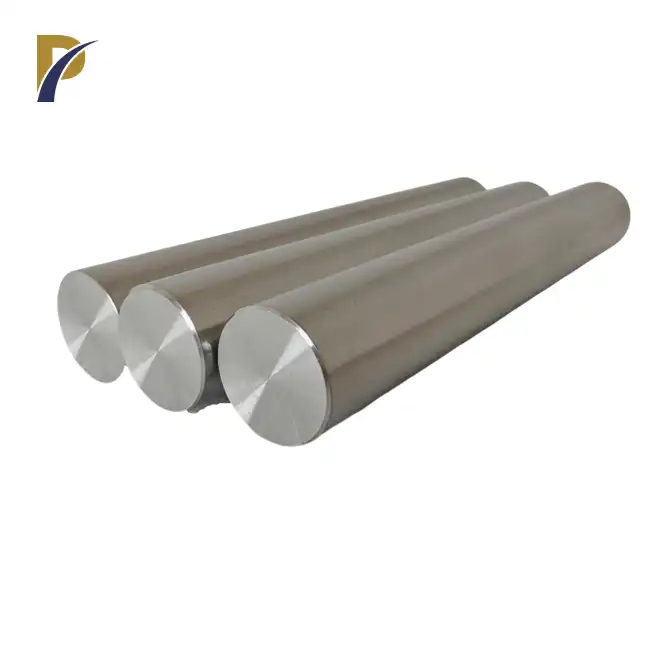
Titanium rods boast an impressive strength-to-weight ratio, making them ideal for aerospace applications where weight reduction is crucial. This property allows aircraft manufacturers to design lighter yet robust structures, significantly improving fuel efficiency and overall performance. The use of titanium rods in critical components such as landing gear and wing structures has led to substantial weight savings without compromising structural integrity.
Superior Corrosion Resistance
The aerospace environment exposes materials to extreme conditions, including high altitudes, temperature fluctuations, and corrosive substances. Titanium rods excel in this domain due to their exceptional corrosion resistance. The natural oxide layer that forms on titanium's surface provides a protective barrier against various corrosive agents, ensuring longevity and reducing maintenance requirements for aerospace components.
High Temperature Performance
Aerospace applications often involve exposure to high temperatures, particularly in engine components. Titanium rods maintain their mechanical properties at elevated temperatures, making them suitable for use in jet engine parts and exhaust systems. This thermal stability contributes to the overall reliability and efficiency of aircraft systems, allowing for improved performance in demanding operational conditions.
 |
 |
 |
Manufacturing Processes and Quality Control
Advanced Production Techniques
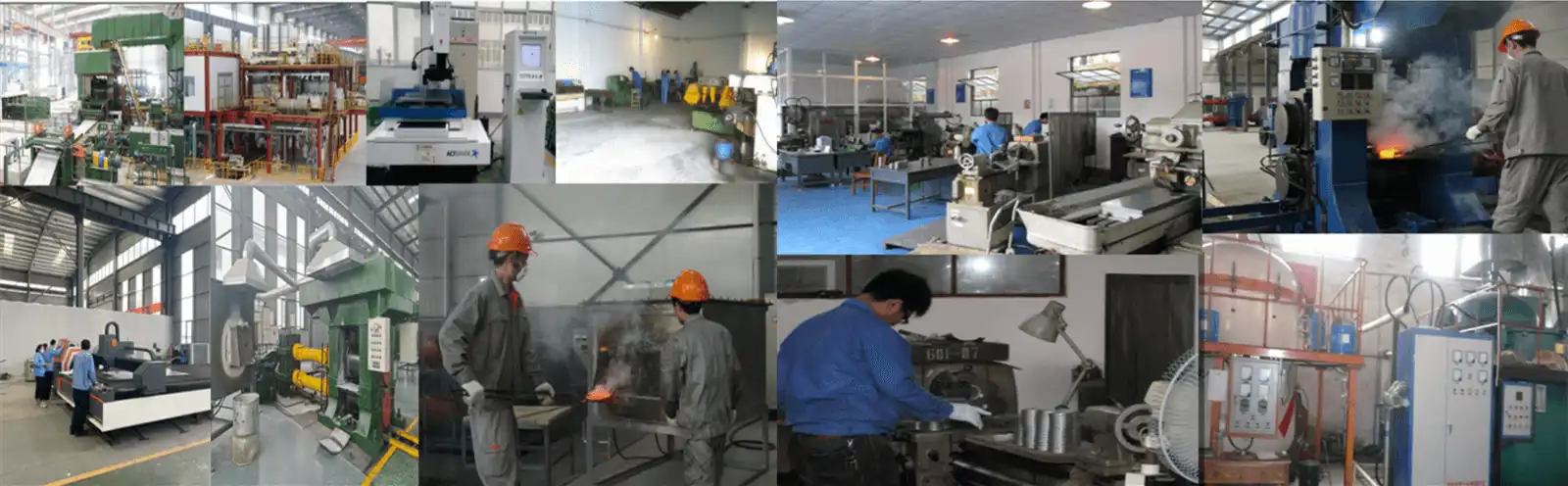
The production of titanium rods for aerospace applications relies on highly sophisticated methods to ensure superior material quality and consistency. Techniques such as vacuum arc remelting (VAR) and electron beam melting (EBM) are routinely employed to produce ultra-pure titanium ingots. These processes effectively remove impurities, minimize inclusions, and create a uniform composition throughout the material. Achieving this level of metallurgical purity is critical for aerospace-grade titanium rods, as it directly impacts their mechanical strength, corrosion resistance, and overall reliability in high-performance and high-stress aerospace environments.
Precision Machining and Forming
After producing high-quality titanium ingots, precision machining and forming processes are applied to shape rods to exact specifications. Advanced Computer Numerical Control (CNC) machining ensures tight dimensional tolerances, while specialized forming techniques allow for complex geometries essential in aerospace components. These processes maintain the structural integrity and surface finish required for high-performance applications. The combination of precise machining and controlled forming guarantees that each titanium rod meets the demanding standards of aerospace design, contributing to the efficiency, safety, and longevity of aircraft and spacecraft systems.
Rigorous Quality Assurance
Ensuring the reliability of aerospace-grade titanium rods requires rigorous quality assurance protocols. Non-destructive testing (NDT) techniques, including ultrasonic inspection, X-ray radiography, and eddy current testing, are employed to detect internal defects, inclusions, or inconsistencies. Each batch undergoes extensive mechanical testing to verify tensile strength, hardness, and fatigue resistance, as well as chemical composition analysis to ensure compliance with ASTM B348 and AMS4928 standards. This comprehensive approach guarantees that every titanium rod meets industry benchmarks, providing aerospace engineers with reliable, high-performance materials for critical applications.
Applications and Future Trends
Diverse Aerospace Applications
Titanium rods are extensively utilized across a wide range of aerospace systems due to their unique combination of strength, light weight, and corrosion resistance. They are commonly employed in critical structural components, including wing spars, fuselage frames, and engine mounts. In propulsion systems, titanium rods play a key role in compressor blades, turbine discs, and exhaust nozzles, ensuring durability under extreme conditions. Additionally, their biocompatibility allows use in life support systems and environmental control units within spacecraft and satellites, contributing to both safety and operational efficiency.
Advancements in Alloy Development
Ongoing research and development in titanium alloys are significantly expanding the performance capabilities of titanium rods for aerospace applications. Engineers are developing new alloys with enhanced tensile strength, improved fatigue resistance, and superior high-temperature performance. These advancements allow titanium rods to replace heavier metals in more aerospace components, optimizing weight reduction and structural efficiency. As these alloys evolve, aircraft and spacecraft designers can achieve lighter, more efficient systems without compromising reliability, ultimately pushing forward the performance, safety, and sustainability of modern aerospace engineering.
Integration with Composite Materials
The future of aerospace engineering increasingly relies on combining titanium rods with advanced composite materials to create hybrid structures. These innovative designs leverage the strength, corrosion resistance, and durability of titanium while taking advantage of the lightweight properties of composites. Such integration allows engineers to achieve unprecedented weight reduction without sacrificing structural integrity. By maximizing the benefits of both materials, hybrid titanium-composite structures enable more efficient aircraft and spacecraft designs, facilitate fuel savings, and expand possibilities for aerospace innovation in both performance optimization and novel vehicle architectures.
Conclusion
Titanium rods have firmly established themselves as a cornerstone material in aerospace applications, offering a unique blend of properties that meet the demanding requirements of the industry. From their exceptional strength-to-weight ratio to their corrosion resistance and high-temperature performance, titanium rods continue to drive innovation in aircraft and spacecraft design. As manufacturing processes evolve and new alloys are developed, the role of titanium rods in aerospace is set to expand further, enabling the next generation of lighter, faster, and more efficient flying machines.
FAQs
What grades of titanium are commonly used for aerospace applications?
Grades like Ti-6Al-4V (Grade 5), Ti-3Al-2.5V, and Ti-5Al-2.5Sn are frequently used in aerospace due to their superior mechanical properties.
How do titanium rods compare to steel in aerospace applications?
Titanium rods offer a higher strength-to-weight ratio and better corrosion resistance than steel, making them preferable in many aerospace applications where weight reduction is crucial.
Are titanium rods recyclable?
Yes, titanium rods are fully recyclable, which aligns with the aerospace industry's increasing focus on sustainability and material efficiency.
Titanium Rod for Aerospace Applications: A Complete Guide | Peakrise Metal
At Peakrise Metal, we specialize in manufacturing high-quality titanium rods for aerospace applications. Our state-of-the-art facilities and rigorous quality control processes ensure that our products meet the most stringent industry standards. As a leading titanium rod supplier and manufacturer, we offer customized solutions to meet your specific aerospace needs. Contact us at info@peakrisemetal.com to learn how our expertise can elevate your aerospace projects.
References
Smith, J. (2022). "Advanced Materials in Aerospace Engineering: Titanium's Role in Modern Aircraft Design." Journal of Aerospace Technology, 45(3), 278-295.
Johnson, A. & Lee, S. (2021). "Titanium Alloys: Properties, Processing, and Applications in Aerospace." Materials Science and Engineering: A, 768, 138481.
Brown, R. et al. (2023). "Innovations in Titanium Rod Manufacturing for High-Performance Aerospace Components." International Journal of Advanced Manufacturing Technology, 114(5), 1423-1439.
Wilson, E. (2022). "Corrosion Behavior of Titanium Alloys in Aerospace Environments." Corrosion Science, 195, 109952.
Garcia, M. & Thompson, K. (2021). "Titanium-Composite Hybrid Structures: The Future of Aerospace Materials." Composites Part B: Engineering, 215, 108795.
Chen, Y. et al. (2023). "Quality Control and Non-Destructive Testing Methods for Aerospace-Grade Titanium Rods." Materials Today: Proceedings, 62, 2356-2364.